
When the Winter Residents Leave: Companion Care for Green Valley Seniors Who Stay All Summer


Quick answer: Companion care is a form of in-home senior care that brings someone into your parent's day to share conversation, enjoy a morning walk, run errands together, or simply sit down for lunch. In Green Valley, that companionship can be especially meaningful from May to October, when winter residents head north, activities slow down, and summer heat keeps more people indoors. Our caregivers are seniors themselves, bringing shared experiences and a familiar sense of connection to each visit. Many families begin with three- or four-hour visits a few days a week.
Green Valley is built around people. Nearly eight in ten residents are 65 or older, and from November to April the place hums: GVR classes, bridge tables, church groups, the neighbor two doors down who waves every morning. Then May comes. The Minnesota plates disappear, the pool class drops from twenty people to six, and the street goes quiet.
For a senior who stays year-round, that quiet is the hard part. It isn't dramatic. It's a calendar that empties one line at a time, a thermometer that says stay inside, and a daughter in Denver who hears "I'm fine" on every call.
Here's what a summer companion care visit in Green Valley might look like.
7:30 — The cool hour
Our caregiver, Carol, arrives early on purpose. By ten it will be 95 degrees; by two, over 100. So the first hour is the outside hour. She and Margaret walk one loop of the neighborhood while the shade is still on the west side of the street, then sit on the patio with iced tea and the paper.
Carol is 71. She's lived in Green Valley twelve years and knows which neighbors are gone until October and which ones are still around. That's part of the visit too: "Ruth is still here, she asked about you." Margaret hasn't seen Ruth since the bridge group paused in May.
8:30 — The thing on the list
Every visit has one practical anchor. Today it's the pharmacy on Continental and the grocery store, done before the parking lot turns into a griddle. Carol drives. Margaret rides along because getting out of the house is half the point, and because she picks her own peaches.
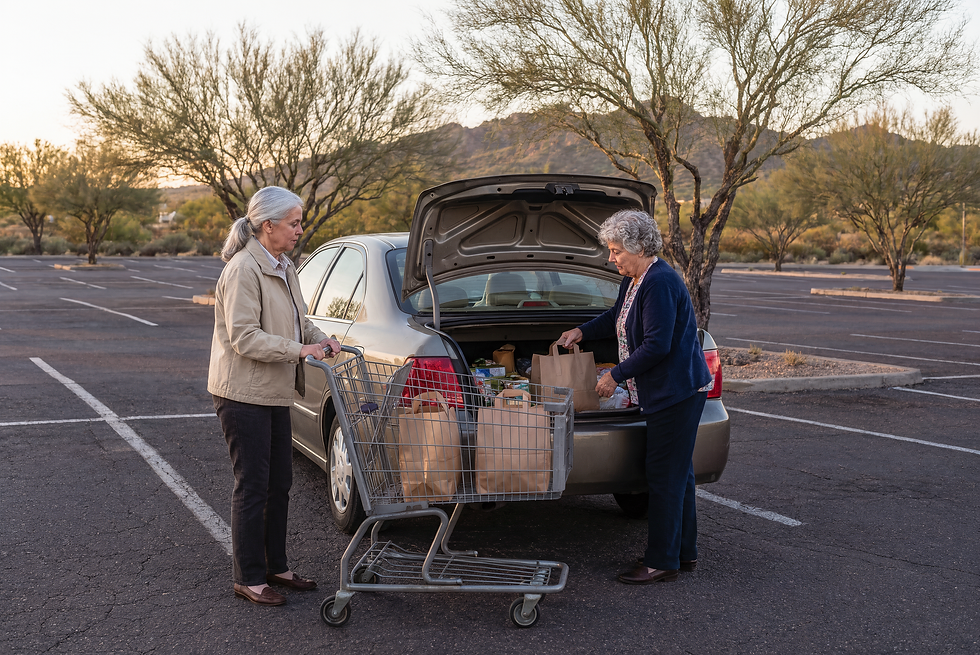
During a Green Valley summer, planning errands for the cooler morning hours can make getting out of the house a little more comfortable. The heat is something older adults and their families have to take seriously, even when an outing seems simple. A companion caregiver can assist with planning those trips, offer reminders to drink water, and make sure a refreshing glass is within reach when they get home.
10:00 — Lunch that gets eaten
Back home, lunch is made together. Margaret cooked for a family of five for forty years and does not want to be waited on, so Carol chops while Margaret supervises and corrects her. They eat at the table.
This is where companionship quietly turns into care. Sometimes it's the little things that make the biggest difference. Preparing a meal together, sitting down at the table, and having someone to share a conversation with can bring a little more enjoyment to an ordinary afternoon. For Margaret, it's not just about having lunch ready. It's about enjoying the company while making it.
11:00 — The hour families don't see
Some of the most meaningful moments happen when there's nothing particular that needs to be done. Maybe it's a game of rummy, looking through pictures of the grandkids, or simply enjoying a conversation that wanders from one memory to another. Last week, Carol and Margaret spent some time looking at fall ceramics classes through GVR. Now Margaret has something new to look forward to when the summer begins winding down.
11:45 — Before heading home
Before she goes, Carol reminds Margaret about her medication schedule, makes sure she's comfortable with the house temperature, and writes a few lines in the notebook on the counter: what they did, what Margaret ate, anything that seemed off. If Carol notices something concerning, she can bring it to the office's attention so it can be addressed and communicated appropriately.
Why the caregiver being a senior changes the visit
One of the beautiful things about Seniors Helping Seniors® is the connection that can grow between caregivers and the people they spend time with. Sharing similar life experiences can make conversations feel familiar, and sometimes those shared memories lead to the most meaningful moments.
For Margaret, having Carol visit means having someone to laugh with, share stories with, and look forward to seeing again. Their time together isn't just about getting errands done or preparing lunch. It's about the friendship that can grow through those everyday moments.
Green Valley may feel a little quieter when the winter residents head north, but that doesn't mean the summer months have to feel lonely. Sometimes having someone stop by, share a meal, or spend a morning together can bring a little brightness to the week.
At Seniors Helping Seniors® Southern Arizona, we believe senior care is about more than assistance with everyday tasks. It's also about meaningful connections, familiar conversations, and the comfort of having someone to share a little of your day with, right in the place you call home.
Frequently asked questions
Can companion care start just for the summer?
Yes. Families can arrange companion care for the summer months and adjust visits as their needs change. There are no weekly minimums and no long-term contracts, so the schedule follows what's actually needed.
Does the caregiver help with the heat specifically?
Caregivers can assist with planning outings during cooler hours, offer reminders to stay hydrated, and pay attention to how comfortable the receiver feels at home. When it's simply too hot to be outside, companionship can be just as meaningful indoors.
What if my dad says he doesn't need company?
It's not unusual for someone to feel they don't need companionship, especially when they're used to doing things independently. Sometimes starting with a little practical assistance, like a trip to the pharmacy or grocery store, can make that first visit feel more comfortable. From there, a connection has the opportunity to grow naturally.
If you're picturing what a few mornings a week could do for your parent this summer, call us at (520) 542-2180 or request a free in-home consultation. We serve Green Valley, Sahuarita, Quail Creek, Continental, Amado, Tubac and the surrounding communities.


Comments