
Overnight Care at Home in Sahuarita: When Nights Are the Hard Part


Quick answer: Overnight care at home provides companionship and assistance during the hours when families may need an extra set of hands. At Seniors Helping Seniors®, our overnight caregivers remain awake throughout their shifts, offering support with nighttime bathroom trips, getting in and out of bed, and familiar evening or early morning routines. For families in Sahuarita and Green Valley, overnight care can bring reassurance when a loved one is getting up frequently, experiencing nighttime confusion, or when a spouse needs a chance to rest. Our caregivers are seniors themselves, bringing patience and a familiar sense of companionship to those quieter hours.
Families can carry the days for a long time. Meals, appointments, the shower, the company. What they can't carry is the night, because the night doesn't end. A husband who's been getting up with his wife three times a night for six months is exhausted, too. And sooner or later, that lack of rest begins taking a toll on him.
Here's what overnight care at home can look like, when families might consider it, and how that extra assistance can make nights a little easier.
What happens at night that doesn't happen during the day
Wandering. Dementia doesn't keep office hours. The urge to "go home" or "get to work" can surface in the evening or during the night, and in a Sahuarita neighborhood, a front door may open onto a dark street.
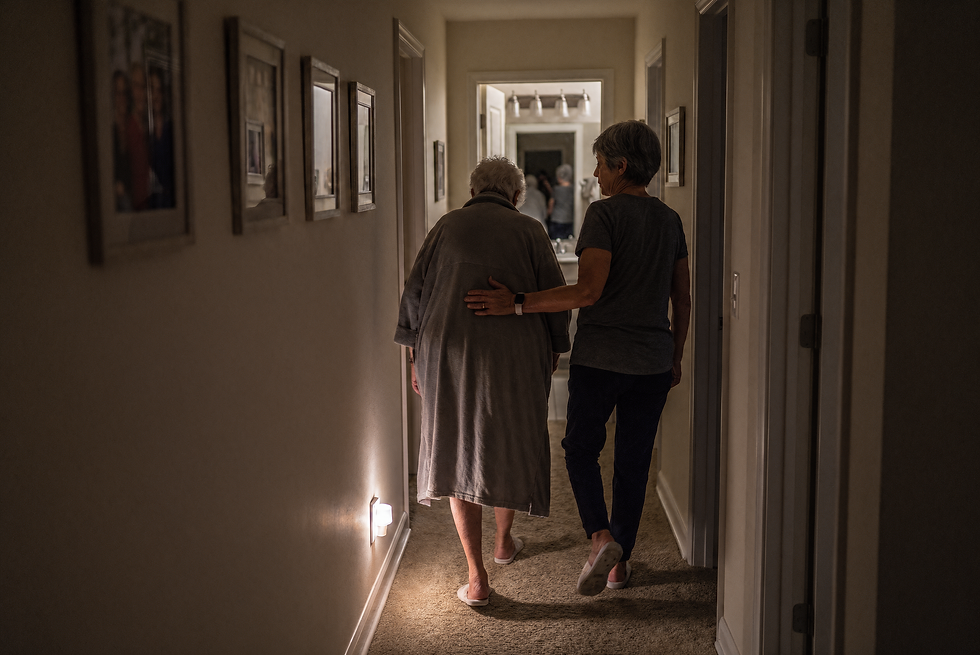
The bathroom trip. Half-awake, no glasses, no light. Getting up to use the bathroom in the middle of the night can become more difficult when balance or mobility is already a concern. A dark hallway or an unexpected obstacle can make those few steps feel much less certain.
Confusion and fear. Waking in the dark not knowing where you are is frightening at any age. With dementia it can mean an hour of agitation that a spouse can't calm alone.
Recovery and changing routines. Coming home after a hospital stay can make nighttime routines feel unfamiliar. Getting comfortable in bed, moving to the bathroom, or simply having someone nearby for reassurance may require a little extra assistance while the receiver settles back into life at home.
And the spouse. The person in the next bed who hasn't slept through the night since spring.
Awake overnight care
The caregiver arrives in the evening, helps with the bedtime routine, and then stays awake. She's in the living room or a chair by the door with a lamp and a book. When your mother gets up, the caregiver is already standing. She walks her to the bathroom, back to bed, and sits with her until she settles. If your mother wants to go "home" at 2 a.m., the caregiver doesn't argue; she offers tea and the photo album and the night goes on.
Having an overnight caregiver in Sahuarita may be a good fit for someone who gets up frequently, experiences nighttime confusion, needs assistance with bathroom trips, or would benefit from having someone available throughout the night.
What if your loved one usually sleeps through the night?
Not everyone who needs overnight care is awake throughout the night. Sometimes the concern is simply that a loved one shouldn't be alone, especially after a hospital stay or when mobility has become more difficult. Even when the receiver sleeps for most of the night, our overnight caregivers remain awake and available if assistance is needed. Families can discuss the schedule and level of support that makes the most sense for their situation.
How families usually start
For families needing respite care, overnight visits can give a spouse or family caregiver time to rest. Some arrange care for a few nights each week, while others may need more consistent coverage. Others may need more consistent coverage, especially after a hospital stay or when nighttime routines have become more difficult. There are no weekly minimums and no long-term contracts, so families can discuss arrangements that fit their needs and caregiver availability.
The morning handoff
The end of an overnight visit is also a chance to share how the night went. Maybe your mother got up a few times, had trouble settling back to sleep, or seemed more comfortable than usual. Caregivers can document observations and communicate important details appropriately, helping families and other caregivers stay familiar with the receiver's needs and routines.
Why a senior caregiver is right for the night
Nights are about calm. Having someone there who understands the value of patience, a quiet conversation, or simply sitting together for a while can bring a sense of reassurance. Because our caregivers are seniors themselves, there's often a natural connection that makes companionship feel more like spending time with a friend than having someone there on a shift.
Frequently asked questions
How do I know if my loved one needs overnight care?
If your loved one is getting up frequently, experiencing nighttime confusion, having difficulty with bathroom trips, or if a family caregiver is struggling to get enough rest, it may be time to consider overnight assistance. Our caregivers remain awake throughout the night, and we can discuss your family's needs during a free in-home consultation.
Can overnight care be combined with day care?
Yes. Overnight assistance can be combined with daytime visits for families who need support at different times. This might include personal care in the morning, companionship during the day, or additional assistance in the evening. For families needing continuous coverage, caregiver shifts can be coordinated based on their needs and availability.
Is overnight care only for dementia?
Not at all. Overnight assistance may be useful after a hospital stay, during recovery, when a spouse is away, or when nighttime mobility has become more challenging. It can also provide non-medical companionship and assistance alongside hospice services. If nights are becoming difficult for your family, it's worth having a conversation about what support is available.
If nights have become the part your family can't carry, call us at (520) 542-2180 or request a free in-home consultation. We serve Sahuarita, Green Valley, Quail Creek, Continental, Amado, Tubac and the surrounding communities.


Comments